



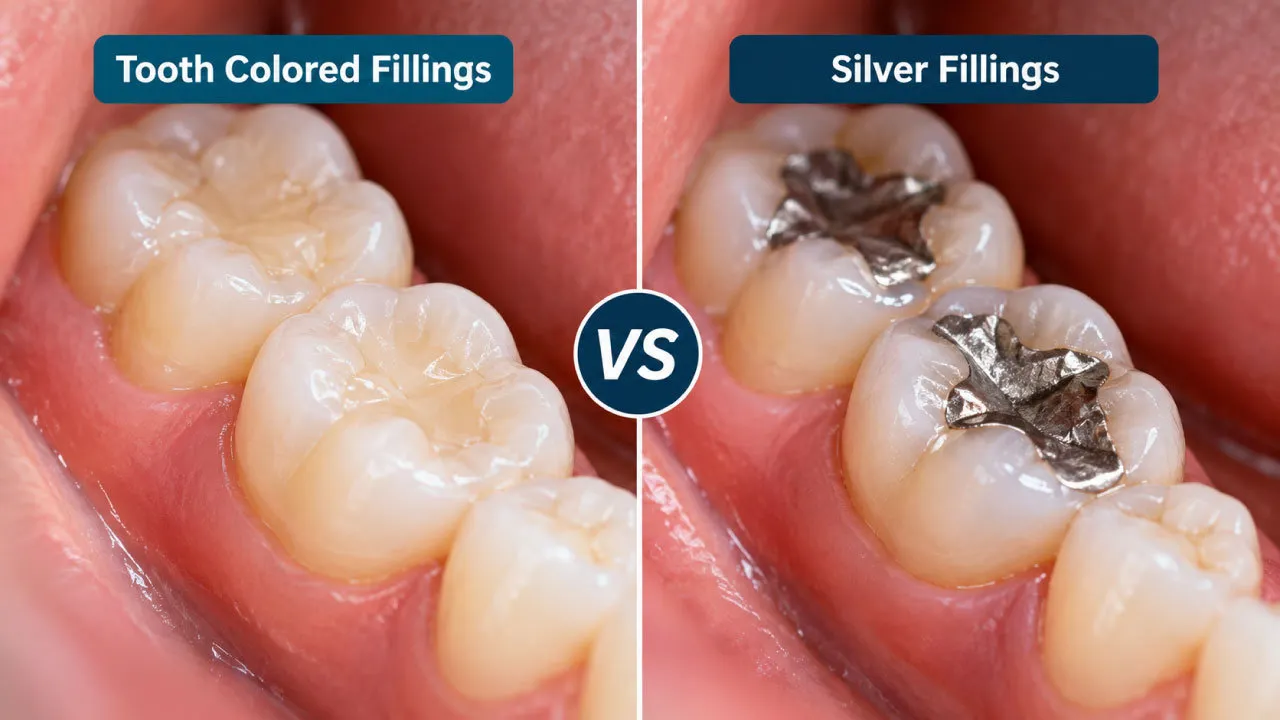
Finding out that you have a cavity is never exciting, but the good news is that modern dentistry offers reliable ways to restore damaged teeth. One question patients often ask after hearing they need a filling is, "Should I choose a tooth-colored filling or a silver filling?"
Both options are designed to repair teeth affected by decay and restore normal function. However, they differ in appearance, materials, durability, and the situations in which they may be recommended. Understanding these differences can help you make a confident decision together with your dentist.
What Is a Dental Filling?
A dental filling is used to restore a tooth after decay has been removed. Once the cavity is cleaned, the empty space is filled with a restorative material that helps protect the tooth, restore its shape, and allow you to chew comfortably again.
The two most commonly discussed materials are composite resin (tooth-colored fillings) and silver amalgam fillings.
What Are Tooth-Colored Fillings?
Tooth-colored fillings are made from a durable composite resin designed to closely match the natural shade of your teeth.
Because they blend in with the surrounding tooth structure, they are especially popular for front teeth and other visible areas of the mouth. The material also bonds directly to the tooth, allowing the dentist to preserve more healthy tooth structure in many cases.
Advantages of Tooth-Colored Fillings
- Blend naturally with your teeth
- Bond directly to the tooth structure
- Preserve more healthy tooth tissue in many situations
- Suitable for both front and many back teeth
- Harden quickly using a special curing light
For many patients, tooth-colored fillings offer an excellent combination of function and aesthetics.
What Are Silver Fillings?
Silver fillings, also known as dental amalgam fillings, have been used successfully for many decades. They are made from a combination of metals, including silver, tin, copper, and mercury, which form a stable dental restorative material.
Silver fillings are known for their durability and have historically been used to restore teeth that experience heavy chewing forces, particularly back molars.
Although they remain a recognized restorative option in certain situations, their use has declined in many practices as tooth-colored materials have become increasingly durable and esthetic.
Key Differences Between Tooth-Colored and Silver Fillings
Appearance
The most obvious difference is how they look. Tooth-colored fillings are matched to your natural tooth shade, making them difficult to notice. Silver fillings are metallic in appearance and remain visible when you smile or laugh.
Strength and Durability
Both materials are durable when placed appropriately. Silver amalgam has a long history of performing well in areas exposed to heavy chewing forces. Modern composite materials have also improved significantly and are now commonly used for many front and back teeth, depending on the size and location of the cavity.
Tooth Preparation
Composite fillings bond directly to the tooth, which often allows dentists to preserve more healthy tooth structure. Silver fillings rely on mechanical retention, so the preparation may differ depending on the clinical situation.
Treatment Time
Both types of fillings are typically completed in a single appointment. Composite fillings require placement in layers and are hardened with a special curing light, while amalgam fillings set differently after placement.
Which Filling Is Right for You?
There isn't a single answer that suits everyone. Your dentist will recommend the most appropriate material based on factors such as:
- The size of the cavity
- The location of the tooth
- Your bite and chewing forces
- Your cosmetic preferences
- Your overall oral health
- The condition of the remaining tooth structure
For many patients today, tooth-colored fillings are a popular choice because they combine strength with a natural appearance. However, the best option is always the one that meets your individual clinical needs.
How Can You Make Your Fillings Last Longer?
Regardless of the material used, good oral care is essential for maintaining your restoration.
To help your fillings last:
- Brush twice daily with fluoride toothpaste
- Floss every day
- Limit sugary snacks and drinks
- Avoid chewing ice or very hard objects
- Visit your dentist regularly for examinations and professional cleanings
Early treatment of small cavities can also help preserve more of your natural tooth.
The Best Filling Is the One That's Right for Your Tooth
Both tooth-colored and silver fillings have helped millions of people restore damaged teeth successfully. While composite fillings are often preferred for their natural appearance and conservative approach, silver fillings may still be appropriate in selected clinical situations.
Rather than focusing on which material is universally "better," it's more important to choose the option that's most suitable for your specific tooth. A thorough dental examination will help determine the restoration that offers the best long-term outcome for your smile.
Begin Your Dental Care Journey With Dr. Mohammed Moin Holy
If you've been diagnosed with a cavity and are unsure whether a tooth-colored or silver filling is the right choice, consult Dr. Mohammed Moin Holy. A comprehensive dental evaluation can help determine the most suitable restorative material based on your tooth's condition, functional needs, and aesthetic goals, allowing you to restore your smile with confidence.
Frequently Asked Questions
Q: Are tooth-colored fillings as strong as silver fillings?
A: Modern composite fillings are highly durable and suitable for many front and back teeth. Your dentist will recommend the best material based on your individual case.
Q: Which filling looks more natural?
A: Tooth-colored composite fillings are designed to match your natural tooth shade, making them much less noticeable than silver fillings.
Q: Can old silver fillings be replaced with tooth-colored fillings?
A: In many cases, yes. Your dentist can evaluate your existing fillings and determine whether replacement is appropriate.
Q: Do both types of fillings treat cavities effectively?
A: Yes. Both composite and silver fillings restore teeth after decay has been removed. The choice depends on the clinical situation and your preferences.
Q: How long do dental fillings last?
A: The lifespan varies depending on the material, oral hygiene, chewing habits, and regular dental care. Routine dental checkups help monitor the condition of your fillings.

Your Trusted Dentist in Mumbai!
Experience dental care like never before with Dr. Mohammed Moin Holy. At DentAesthe, your smile gets the attention it deserves.
©2026 | Dr. Mohammed Moin Holy | All Rights Reserved | Digital Marketing By Remedo